
Indian Constitution – Structure, Principles & Governance
Indian Polity made clear — for CLAT, AILET, MHCET, and CUET aspirants, first-year LL.B students, and UPSC beginners alike.
 Taught byLakshita GoyalB.Com, LL.B
What you'll learn
The Indian Constitution, the world's longest, balances flexibility, federalism, and democracy through Fundamental Rights, Directive Principles, Duties, and the Union, State, and Local Government structure. Gain exam-ready clarity on judicial review, emergencies, finance, elections, language policy, and landmark amendments.
Course content
10 modules10 lessons2h 17m
Salient Features of the Indian Constitution1 lesson · 11 min
- 01COI_V1
Fundamental Rights (Part I)1 lesson · 15 min
- 02COI_V2
Fundamental Rights (Part II)1 lesson · 15 min
- 03coi-v3
DPSPs & Fundamental Duties1 lesson · 13 min
- 04COI_V4
Union Government (Part 5)1 lesson · 15 min
- 05COI_V5
State Government (Part 6)1 lesson · 12 min
- 06Constitution of India video 6
Local Government and Special Provisions1 lesson · 13 min
- 07Constitution of India video 7
Judiciary & Emergency Provisions1 lesson · 15 min
- 08Constitution of India video 8
Federal System, Centre–State Relations & Administrative Structure (Parts X–XIV)1 lesson · 13 min
- 09Constitution of India video 9
Tribunals, Elections, Official Language, Special & Miscellaneous Provisions (Parts XIV-A to XXII)1 lesson · 15 min
- 10Constitution of India video 10
About this course
Course Outcomes:
- Interpret constitutional articles with case laws, Analyze governance and institutions, evaluate rights, duties, DPSPs and emergency powers, apply principles to legal reasoning, and compare Indian constitutional features globally.
- Know about the Constitution’s evolution, structure, key provisions, government functioning, democracy, federalism, emergencies, amendments, judiciary, elections, language, local bodies, and special provisions.
- feel confident, empowered, legally aware, and exam-ready—without being overwhelmed by lengthy provisions.
Your teacher

Lakshita Goyal
B.Com, LL.BPracticing advocate and law educator, simplifying case law and legal reasoning for CLAT aspirants with clarity and confidence
More to learn
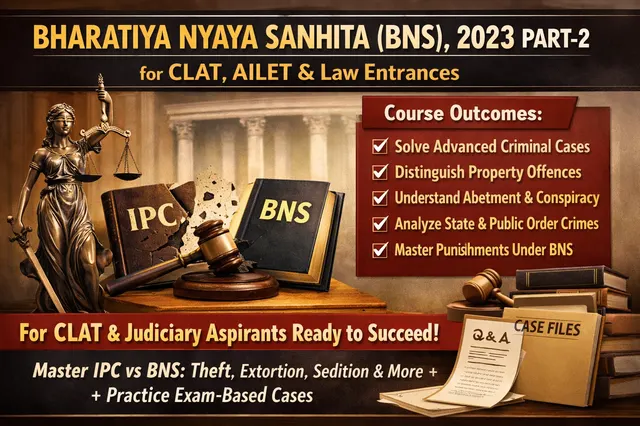
BHARATIYA NYAYA SANHITA (BNS), 2023 PART-2 for CLAT, AILET & Law Entrances
Lakshita Goyal
₹499
View course
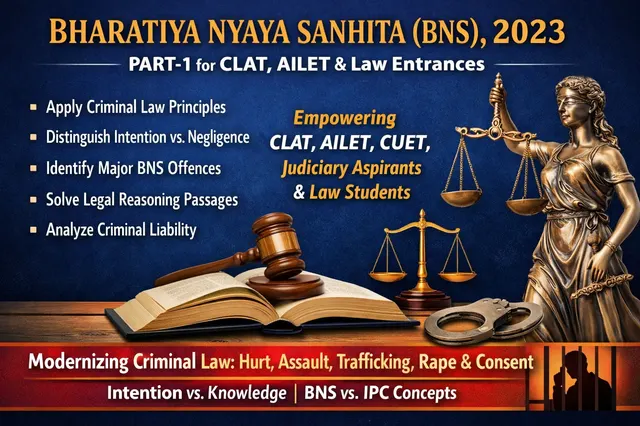
BHARATIYA NYAYA SANHITA (BNS), 2023 PART-1 for CLAT, AILET & Law Entrances
Lakshita Goyal
₹499
View course
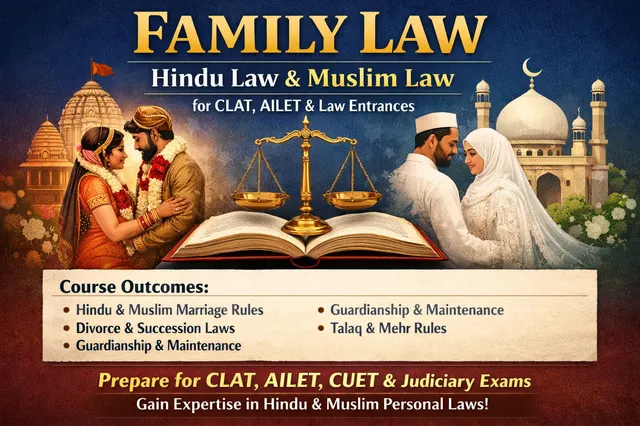
FAMILY LAW - Hindu Law & Muslim Law for CLAT, AILET & Law Entrances
Lakshita Goyal
₹499
View course