The D-Block Elements — Chemistry of Transition and Inner Transition Metals Part1
D-block chemistry made real — for Class 11-12 learners, NEET/JEE aspirants, and curious beginners alike.
 Taught bySakshi ChauhanB.Sc. Biochemistry, M.Sc. Chemistry, B.Ed.
What you'll learn
Transition metals show variable oxidation states, colorful complexes, and catalytic power driven by d-electrons. Lanthanoids enable magnets and luminescence, actinoids are radioactive, and alloys like steel shape civilization, with corrosion controlled through protective methods.
Course content
10 modules10 lessons2h 30m
Introduction to D-Block Elements1 lesson · 16 min
- 01D BLOCK VIDEO 1
Electronic Configuration and General Characteristics1 lesson · 14 min
- 02D BLOCK VIDEO 2
Trends and Variations Across the D-Block1 lesson · 15 min
- 03D BLOCK VIDEO 3
Coordination Compounds — Structure and Bonding1 lesson · 16 min
- 04D BLOCK VIDEO 4
Crystal Field Splitting and Magnetic Properties1 lesson · 16 min
- 05D BLOCK VIDEO 5
Applications and Stability of Coordination Compounds1 lesson · 15 min
- 06D BLOCK VIDEO 6
Inner Transition Elements — Lanthanoids and Actinoids1 lesson · 14 min
- 07D BLOCK VIDEO 7
Comparative Study of Transition Series — 3d, 4d, and 5d1 lesson · 15 min
- 08D BLOCK VIDEO 8
Alloys and Industrial Importance of Transition Metals1 lesson · 15 min
- 09D BLOCK VIDEO 9
Corrosion and Its Prevention1 lesson · 15 min
- 10D BLOCK VIDEO 10
About this course
Course Outcomes:
- Explore, predict, and explain the unique behaviors and applications of transition and inner transition elements.
- Understand how d-electrons shape the color, magnetism, and reactivity of metals
- Feel inspired by how the hidden world of d-electrons powers the visible wonders of chemistry.
Your teacher

Sakshi Chauhan
B.Sc. Biochemistry, M.Sc. Chemistry, B.Ed.Chemistry educator known for interactive real-life-based lessons that inspire curiosity and connect with learners worldwide.
More to learn
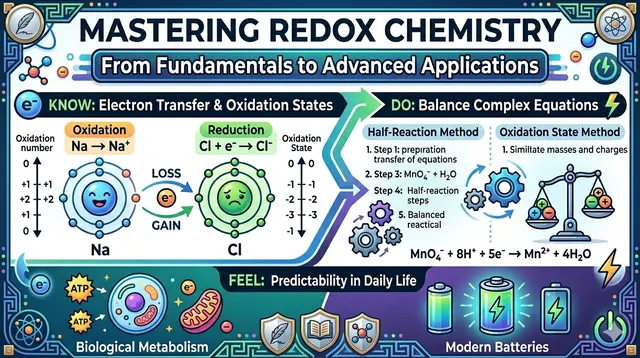
Mastering Redox Chemistry: From Fundamental Transfers to Advanced Applications
Sakshi Chauhan
₹499
View course
The p-Block Elements — Chemistry of Life, Atmosphere, and Industry-part 2
Sakshi Chauhan
₹499
View course
The p-Block Elements — Chemistry of Life, Atmosphere, and Industry Part1
Sakshi Chauhan
₹499
View course