
Mastering Alternating Current Circuits: Principles, Analysis, and Practical Applications"
From power generation to your daily life — master alternating current for JEE, BITSAT, CET, Olympiads, and budding engineers.
 Taught bySugapriya SankarasubbuM.Sc. Materials Science, B.Ed., MBA
What you'll learn
Explore AC fundamentals — waveforms, RMS values, induction, and resistive, inductive, and capacitive circuits — alongside resonance and transformers. Gain hands-on insight into instruments and three-phase systems, linking theory to motors, radios, and household power.
Course content
10 modules10 lessons2h 37m
Introduction to AC: Introduction to AC and its terms1 lesson · 16 min
- 01Alternate current video 1
Introduction to AC -- Generation of Alternating Current1 lesson · 15 min
- 02Alternating current video 2
AC in circuits-- AC in Resistive Circuits1 lesson · 17 min
- 03Alternating current video 3
AC in circuits -AC in Inductive and Capacitive Reactance1 lesson · 14 min
- 04Alternating current video 4
AC in circuits - AC Circuits with R, L, and C (Series and Parallel)1 lesson · 17 min
- 05Alternating current video 5
AC in circuits - Power in AC Circuits1 lesson · 16 min
- 06Alternating current video 6
AC in circuits --- Resonance in AC Circuits1 lesson · 20 min
- 07Alternating current video 7
Transformers -Transformers and AC Power Transmission1 lesson · 16 min
- 08Alternating current video 8
More with AC- Measurement Instruments in AC Circuits1 lesson · 15 min
- 09Alternating current video 9
More with AC- Transient Phenomena and Three-Phase Systems in AC Circuits1 lesson · 13 min
- 10Alternating Current video 10
About this course
Course Outcomes:
- to design and analyze AC circuits, calculate key parameters (RMS, reactance, impedance, phase angle, power factor), solve practical AC problems, and safely demonstrate typical AC devices.
- To grasp AC fundamentals — generation, waveforms, AC vs. DC, RLC behavior, resonance, and transformer roles in power distribution.
- To feel confident applying AC theory to experiments, solving circuit problems, and handling real-world electrical devices with clarity.
Your teacher
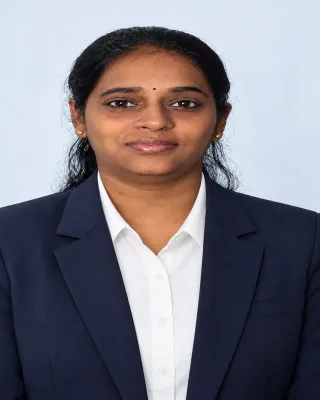
Sugapriya Sankarasubbu
M.Sc. Materials Science, B.Ed., MBAGlobal science mentor specializing in Physics, Chemistry, and Math, creating high-impact resources aligned with international standards.
More to learn
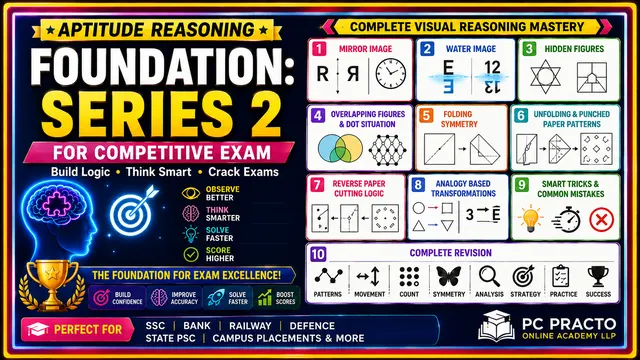
Aptitude Reasoning Foundation: Series 2-for Competitive Exam
Sugapriya Sankarasubbu
₹499
View course
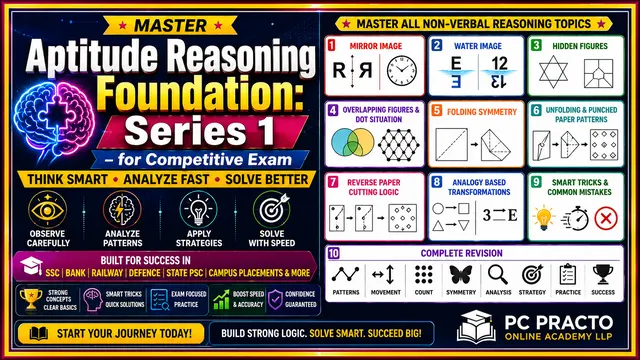
Aptitude Reasoning Foundation: Series 1-for Competitive Exam
Sugapriya Sankarasubbu
₹499
View course
Quantitative Reasoning Foundation: Series 4 for Competitive Exams
Sugapriya Sankarasubbu
₹499
View course